
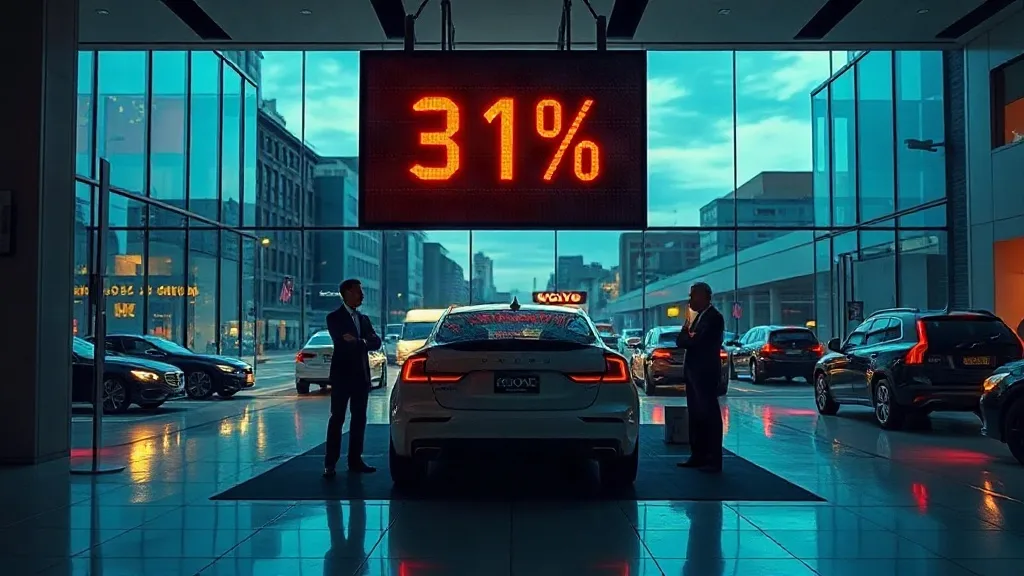
In a dramatic turn of events, Volvo Cars witnessed its shares nosedive by 31% on Thursday, marking one of the steepest single-day declines in the automaker's recent history. The sell-off was triggered by a sobering announcement: the company is grappling with "tougher" market conditions in China and the United States, which have significantly eroded its free cash flow. As a result, Volvo is cutting jobs and bracing for a challenging road ahead. For investors and industry watchers, this is a stark reminder of the headwinds facing even the most established players in the global auto industry.
The Perfect Storm: China and U.S. Slowdowns
Volvo's troubles didn't appear overnight. The automaker has been navigating a complex landscape in its two largest markets. In China, the world's biggest auto market, economic growth has slowed, consumer confidence has waned, and a fierce price war among electric vehicle (EV) makers has intensified. This has put pressure on Volvo's sales and margins. Meanwhile, in the U.S., higher interest rates and inflationary pressures have dampened consumer spending on big-ticket items like cars. Volvo also faces stiff competition from domestic EV manufacturers and legacy rivals ramping up their electric offerings.
The company's free cash flow, a key metric of financial health, has taken a hit as a result. Free cash flow is the cash generated after accounting for capital expenditures, and it's essential for funding operations, paying down debt, and investing in future growth. Volvo's management cited these deteriorating conditions as the primary reason for the profit warning that sent shares tumbling.
Job Cuts: A Painful but Necessary Step
In response to the financial squeeze, Volvo announced fresh job cuts. While the exact number of positions affected has not been disclosed, the move signals a need to reduce costs and streamline operations. This is never an easy decision, and it comes at a time when the auto industry is already undergoing a massive transformation toward electrification and software-defined vehicles. For Volvo, the cuts are likely aimed at preserving cash and maintaining flexibility as it navigates the downturn.
It's worth noting that Volvo had already initiated a global restructuring program earlier this year, aiming to cut costs and improve efficiency. The latest job cuts are an extension of those efforts, underscoring the depth of the challenges the company faces.
Market Reaction and Investor Sentiment
The market's response was swift and brutal. The 31% drop in share price wiped out billions in market value and reflects growing skepticism about Volvo's near-term prospects. Analysts had been cautiously optimistic about the company's electric transition, but the profit warning has raised questions about execution and the pace of recovery in key markets.
Investors are now closely watching for signs of stabilization. Volvo's ability to manage costs, innovate, and maintain market share in a hyper-competitive environment will be critical. The company's upcoming earnings report will be scrutinized for further details on the financial impact and management's strategy to turn things around.
What This Means for the Auto Industry
Volvo's plight is not isolated. The global auto industry is facing a perfect storm of slowing demand, rising costs, and a costly transition to electric vehicles. Many automakers are grappling with similar issues, and Volvo's warning could be a bellwether for others. The pressure is particularly acute in China, where local EV makers are flooding the market with affordable models, forcing foreign brands to rethink their strategies.
For Volvo, which is majority-owned by China's Geely, the challenges in China are especially significant. The company must find a way to compete in a market that is rapidly shifting toward EVs and where domestic brands have a strong home-field advantage. In the U.S., Volvo is investing heavily in its South Carolina plant to produce EVs for the American market, but the timing coincides with a period of uncertainty.
Looking Ahead: Can Volvo Turn the Tide?
Despite the grim news, Volvo remains committed to its long-term vision. The company has a strong brand, a loyal customer base, and a clear roadmap for electrification. Its recent launches, such as the EX90 electric SUV, have been well-received. However, the road ahead is fraught with obstacles. Volvo must execute flawlessly on its cost-cutting measures, accelerate its EV rollout, and navigate the geopolitical and economic uncertainties that lie ahead.
For now, the focus is on damage control. The job cuts are a painful but necessary step to right-size the business. Whether Volvo can regain investor confidence and steer through this turbulent period will depend on how quickly it can adapt to the new reality.
Frequently Asked Questions
Why did Volvo Cars shares drop 31%?
Shares fell 31% after Volvo issued a profit warning, citing tougher market conditions in China and the U.S. that negatively affected free cash flow. The company also announced job cuts, which heightened investor concerns about its financial health.
How many jobs is Volvo cutting?
Volvo has not disclosed the exact number of job cuts. The move is part of a broader effort to reduce costs and preserve cash amid deteriorating market conditions.
What are the main challenges Volvo faces in China and the U.S.?
In China, Volvo faces a slowing economy, intense competition from local EV makers, and a price war. In the U.S., higher interest rates and inflation have dampened consumer demand, while competition in the EV segment is heating up.
How does this affect Volvo's electric vehicle plans?
Volvo remains committed to electrification, but the financial pressures may force it to adjust timelines or investments. The company is likely to prioritize cash preservation and efficiency as it continues its EV rollout.
What should investors watch for next?
Investors will look for Volvo's upcoming earnings report for more details on the financial impact and management's turnaround strategy. Key indicators include free cash flow, sales trends in China and the U.S., and progress on cost-cutting measures.