
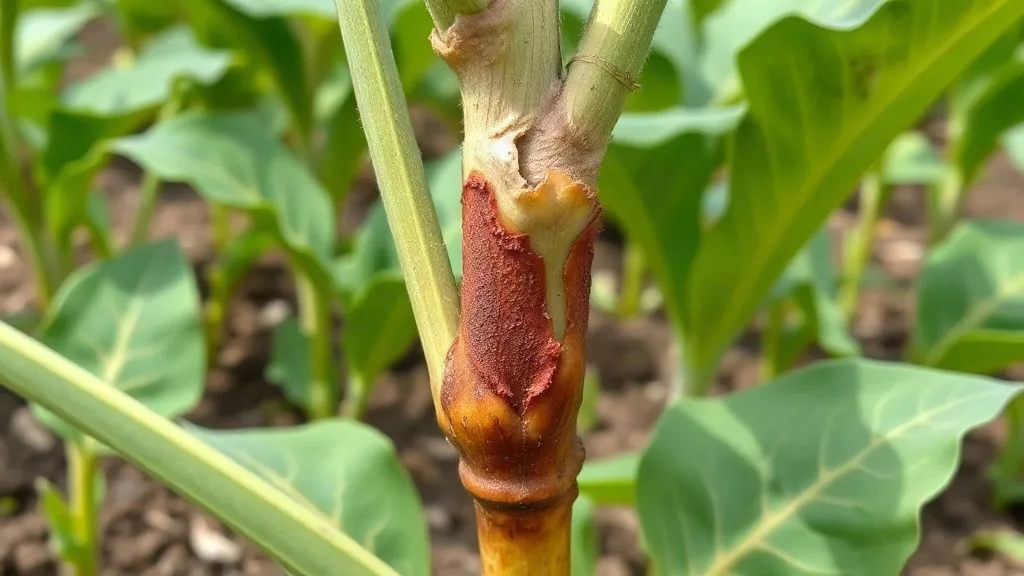
Something insidious is lurking in the soil of America's soybean belt. Red crown rot, a fungal disease that attacks soybean plants, has been quietly gaining ground since it was first identified in Illinois in 2018. Now, it's surging across the state and neighboring regions, prompting researchers and farmers to take notice. At the forefront of the battle is Boris Camiletti, a plant pathologist at the University of Illinois Urbana-Champaign, who is leading efforts to understand and combat this emerging threat.
What Is Red Crown Rot?
Red crown rot is caused by the fungus Calonectria ilicicola. It infects soybean plants through the roots and lower stem, leading to symptoms that can be easily confused with other diseases like sudden death syndrome (SDS) or stem canker. The disease gets its name from the reddish-brown discoloration that appears on the crown and lower stem of infected plants. Above ground, symptoms include yellowing and wilting of leaves, often starting from the lower canopy and progressing upward. In severe cases, plants may die prematurely, significantly reducing yield.
Unlike some foliar diseases, red crown rot is a soilborne pathogen, meaning it can persist in the soil for years, even in the absence of a host. This makes management particularly challenging. The fungus produces survival structures called microsclerotia that can remain viable in crop residue and soil for extended periods.
Why Is It Spreading Now?
Red crown rot is not new to the Midwest; it was first reported in Illinois in 2018. However, its recent surge has caught many by surprise. Several factors may be contributing to its spread. Changes in weather patterns, with wetter springs and summers, create favorable conditions for the fungus. Additionally, the widespread adoption of no-till farming, while beneficial for soil health, can leave more crop residue on the surface, providing a refuge for the pathogen. Furthermore, the disease may have been present at low levels for years, only now reaching thresholds that cause noticeable economic damage.
How Does It Impact Soybean Yield?
Yield losses from red crown rot can vary depending on the severity of infection and environmental conditions. In fields where the disease is established, losses can range from 10% to 30%, and in severe cases, entire fields may be lost. The disease is particularly damaging when infection occurs early in the season, as it can stunt plant growth and reduce pod fill. Because symptoms can mimic other diseases, accurate diagnosis is crucial for effective management.
Expert Insights: Q&A with Boris Camiletti
To gain deeper insight into red crown rot, we spoke with Boris Camiletti, a plant pathologist at the University of Illinois Urbana-Champaign. Camiletti's research focuses on understanding the biology and epidemiology of soilborne pathogens, with a special emphasis on red crown rot.
What are the key symptoms growers should look for?
"The most distinctive sign is the red discoloration on the crown and lower stem, just below the soil line," Camiletti explains. "But above ground, it's trickier. You might see interveinal chlorosis, where the tissue between veins turns yellow while veins stay green, similar to SDS. However, with red crown rot, the symptoms often appear earlier and can be more patchy. Another clue is the presence of tiny red perithecia (fruiting bodies) on the stem near the soil line, though these are not always visible."
How is red crown rot diagnosed?
"Accurate diagnosis requires laboratory testing," says Camiletti. "Growers can submit plant samples to their local extension office or diagnostic clinic. The fungus can be isolated from infected tissue and identified by its morphology or through molecular techniques. It's important to differentiate it from other diseases because management strategies differ."
What management strategies do you recommend?
"There is no silver bullet," Camiletti admits. "A combination of approaches is needed. Crop rotation with non-host crops like corn can help reduce inoculum levels, but the fungus can survive for several years, so longer rotations are better. Tillage can bury inoculum, but it may conflict with conservation goals. Seed treatments may offer some protection, but their efficacy is limited. The most promising long-term solution is the development of resistant varieties. Breeding efforts are underway, but it takes time."
What research is currently being done?
"We are working on several fronts," Camiletti says. "We're studying the genetic diversity of the pathogen to understand its spread and to identify sources of resistance. We're also evaluating fungicide efficacy and timing of application. Additionally, we're developing rapid diagnostic tools to help growers make timely decisions. Collaboration is key, and we're partnering with researchers across the Midwest to pool resources and knowledge."
What's Being Done to Combat Red Crown Rot?
The fight against red crown rot involves a coordinated effort. The Crop Protection Network, a multi-state collaboration, provides resources and education for growers. The Illinois Soybean Association and the United Soybean Board have funded research initiatives. Researchers in neighboring states are also joining forces to track the spread and develop management recommendations. This collaborative approach is essential because the pathogen doesn't respect state borders.
What Can Growers Do?
For now, growers are advised to scout fields regularly, especially in areas where red crown rot has been confirmed. If symptoms are observed, submit samples for diagnosis. Implement cultural practices that reduce soil compaction and improve drainage, as waterlogged soils favor infection. Avoid moving soil from infested fields to clean ones. And stay informed through extension resources and industry updates.
Frequently Asked Questions
Is red crown rot the same as sudden death syndrome?
No, they are different diseases caused by different fungi. While both can cause yellowing and wilting, red crown rot is characterized by red discoloration on the crown and lower stem, and it tends to appear earlier in the season. Sudden death syndrome typically shows interveinal chlorosis and necrosis later in the season, and it is favored by cool, wet soils.
Can red crown rot be spread by seed?
Red crown rot is primarily soilborne, but the fungus can be seedborne at low levels. However, seed transmission is not considered a major pathway for spread. The movement of infested soil on equipment is a more significant risk.
Are there resistant soybean varieties available?
Currently, there are no commercial varieties with high levels of resistance to red crown rot. However, researchers are actively screening germplasm for resistance and breeding efforts are ongoing. Some varieties may have partial resistance or tolerance, but growers should not rely solely on genetics for management.
What fungicides are effective against red crown rot?
Fungicide efficacy is limited because the pathogen infects below ground and by the time symptoms appear, it's often too late for effective control. Seed treatments may provide some early protection, but foliar fungicides are generally not effective. Research is ongoing to identify effective active ingredients and application timing.
How can I prevent red crown rot from entering my farm?
Practice good sanitation: clean equipment before moving between fields, especially if you've been in an infested area. Avoid sharing equipment with other farms without cleaning. Use certified seed. And maintain good drainage to reduce favorable conditions for the fungus.
Red crown rot is a complex problem that requires a multi-faceted approach. With continued research and collaboration, the agricultural community is working to mitigate its impact and secure the future of soybean production.