
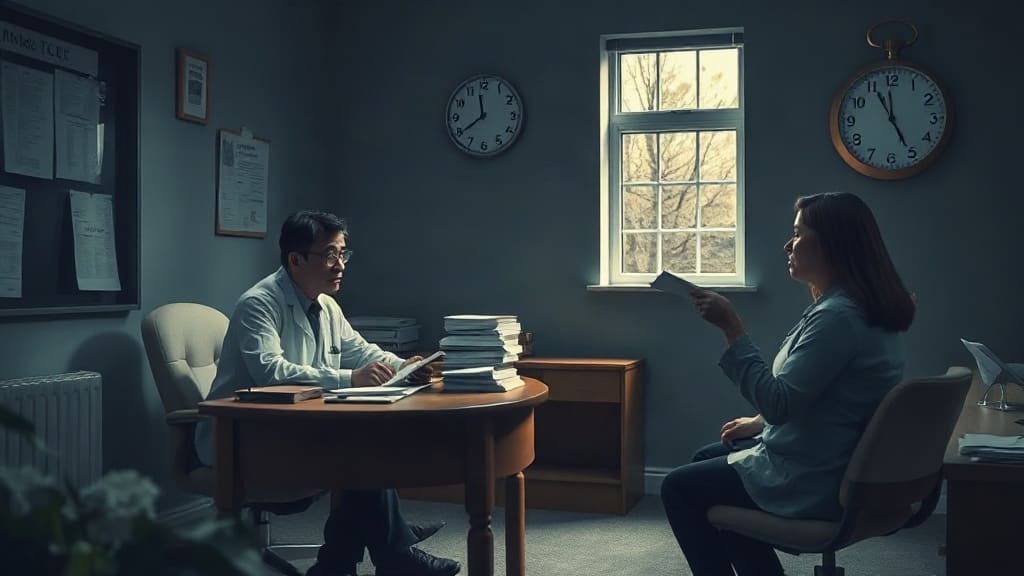
Picture the scene: you've finally secured a GP appointment after weeks of trying. You sit down, ready to discuss not just that nagging pain but also your sleep, your stress, your family history. But within minutes, you're being ushered out with a prescription and a hurried goodbye. If this feels familiar, you're not alone. A new survey from the Royal College of GPs has found that three in four family doctors feel they no longer have enough time to have in-depth conversations with their patients. The days of the leisurely chat about life, health, and happiness seem to be fading fast.
The findings paint a stark picture of modern general practice. According to the professional body for GPs, the majority of doctors report being too busy dealing with the rising tide of illness to engage in the kind of holistic, preventive conversations that were once a hallmark of family medicine. It's not that GPs don't want to talk; it's that the system leaves them little room to do so.
The Shrinking Consultation
The standard GP appointment in the UK is ten minutes. On paper, that might sound adequate for a single issue. But in reality, patients often present with multiple concerns, and ten minutes evaporates quickly once you factor in taking a history, examining, diagnosing, and documenting. Add in the emotional weight of discussing mental health or lifestyle factors, and the clock becomes an enemy. Many GPs now describe their days as a relentless conveyor belt of appointments, with barely a moment to breathe between patients, let alone delve into the nuances of their lives.
Dr. Sarah Williams, a GP in Manchester with over 15 years of experience, told us: 'I used to know my patients' stories. I knew their jobs, their families, their worries. Now I'm lucky if I remember their names from one appointment to the next. It's heartbreaking.' Her sentiment is echoed across the country, where doctors say the pressure to hit targets and manage ever-growing waiting lists has squeezed out the human side of medicine.
Why This Matters for Patients
When GPs don't have time to talk, patients lose more than just a friendly ear. The lack of in-depth conversation can have serious consequences for health outcomes. Preventive care, such as discussing diet, exercise, smoking cessation, and mental well-being, often takes a back seat. Without these conversations, opportunities to catch early warning signs of chronic diseases are missed. Patients may leave with a prescription for a symptom but without addressing the root cause.
Moreover, the therapeutic value of being heard should not be underestimated. For many people, especially those with mental health struggles or chronic conditions, the GP is a first port of call. A rushed appointment can feel dismissive, discouraging patients from seeking help in the future. Trust erodes, and with it, the likelihood of patients adhering to treatment plans or returning for follow-ups.
The Royal College of GPs has long warned that the 10-minute appointment is no longer fit for purpose. Its latest research amplifies that message, showing that the majority of GPs believe the lack of time directly impacts their ability to provide high-quality care. This isn't just about convenience; it's about safety and effectiveness.
The Ripple Effect on Preventive Health
Preventive medicine is the cornerstone of a sustainable healthcare system. Catching problems early saves lives and money. But prevention requires conversation. You can't advise someone on weight management if you don't have time to ask about their eating habits. You can't screen for depression if you're focused solely on their physical symptoms. The survey suggests that the shift away from in-depth dialogue is undermining public health efforts.
Consider the rising rates of type 2 diabetes, obesity, and mental illness. Each of these conditions benefits from early intervention, which often starts with a GP conversation. When those conversations are truncated, the NHS ends up treating more advanced diseases, which are costlier and harder to manage. It's a false economy.
Dr. Williams adds: 'I've had patients break down in tears because they finally felt heard, but that was only possible because I ran over time. Then I'm behind for the rest of the day, and the next patient suffers. It's a vicious cycle.'
What's Driving the Time Crunch?
The reasons behind the shortage of time are multifaceted. Firstly, the UK population is growing and ageing, with more people living with multiple long-term conditions. This increases demand for appointments. Secondly, there's a well-documented shortage of GPs. Many experienced doctors have retired early or reduced their hours due to burnout, while recruitment and retention remain challenging. The result is fewer doctors trying to serve more patients.
Additionally, administrative burdens have ballooned. GPs spend hours on paperwork, referral letters, and navigating complex systems. Time that could be spent with patients is instead consumed by bureaucracy. The pandemic exacerbated these issues, and general practice has yet to recover fully.
Moreover, the model of care has shifted. The push for online consultations and triage systems, while intended to improve access, can sometimes depersonalise care. Patients may be assessed by a form or a call handler before ever seeing a doctor, and by the time they do, the interaction is focused on a specific problem rather than a holistic review.
Patient Perspectives: The Loss of Continuity
For patients, the lack of time translates into a loss of continuity. Seeing the same doctor regularly used to be the norm, allowing for a deeper understanding of a patient's history and circumstances. Now, many patients see a different GP each visit, or even a nurse or physician associate. While these professionals are skilled, the lack of a consistent relationship can make it harder to have meaningful conversations.
One patient, Emily, 42, from Leeds, shared her frustration: 'I've been struggling with anxiety and fatigue for months. Each time I go, I see someone new. They ask a few questions, glance at my notes, and I'm out. I feel like I'm wasting their time, and they're not really listening. I've stopped going.'
This sense of being a burden is dangerous. It can lead to delayed diagnoses and untreated conditions. The GP-patient relationship, built on trust and familiarity, is a powerful tool in healthcare. Its erosion is a loss for everyone.
What Can Be Done?
The Royal College of GPs is calling for urgent investment in general practice. This includes recruiting and retaining more GPs, reducing administrative work, and moving towards longer appointment times as standard. Some pilot schemes have experimented with 15-minute slots, with promising results. But scaling this up requires funding and political will.
There are also calls for a shift in how we think about primary care. Instead of a transactional model where each visit is a discrete event, a more relational approach could be adopted. This might involve team-based care, where GPs work alongside pharmacists, mental health workers, and social prescribers to address wider determinants of health. But even then, the GP's role as a listener and advisor must be protected.
Technology can help, but it's not a panacea. Better triage systems and AI tools might streamline some tasks, freeing up time. However, they cannot replace the human connection that is at the heart of general practice. As Dr. Williams puts it: 'No app can hold a patient's hand or notice the tremor in their voice that signals something deeper.'
What This Means for the Future of the NHS
The findings come at a time when the NHS is under immense strain. Waiting lists are at record highs, and staff morale is low. If GPs cannot provide comprehensive care, the burden shifts to hospitals and emergency departments, which are already overwhelmed. Investing in general practice is not just about making patients happier; it's about making the whole system more efficient.
Furthermore, the health of the nation depends on it. Preventive care is key to tackling health inequalities and improving life expectancy. If we continue to neglect the conversational aspect of medicine, we risk a sicker population and a more expensive healthcare system. The message from GPs is clear: time to talk is not a luxury, it's a necessity.
Frequently Asked Questions
Why are GPs too busy to talk to patients in depth?
GPs are facing a combination of factors: a growing and ageing population with more complex health needs, a shortage of doctors, and increasing administrative tasks. These pressures mean that the standard 10-minute appointment is often insufficient to address multiple issues or have preventive conversations.
How does this affect patient care?
When GPs lack time, patients may receive less holistic care. Preventive advice, mental health support, and discussions about lifestyle factors can be missed. This can lead to delayed diagnoses, poorer management of chronic conditions, and reduced patient trust and satisfaction.
What can patients do to make the most of a short appointment?
Patients can help by prioritising their most pressing concern and mentioning it first. Writing down questions beforehand can also ensure key points are covered. However, it's important to remember that the root cause is systemic, not a failure of patients to communicate effectively.
Are longer appointments the solution?
Longer appointments, such as 15 minutes, can allow for more thorough conversations. However, without addressing the underlying workforce and workload issues, simply extending appointment times may not be feasible. A multifaceted approach is needed.
What is the Royal College of GPs doing about this?
The Royal College of GPs is campaigning for increased investment in general practice, including more GPs, reduced bureaucracy, and longer appointment times. It also advocates for a shift towards preventive and holistic care models.