
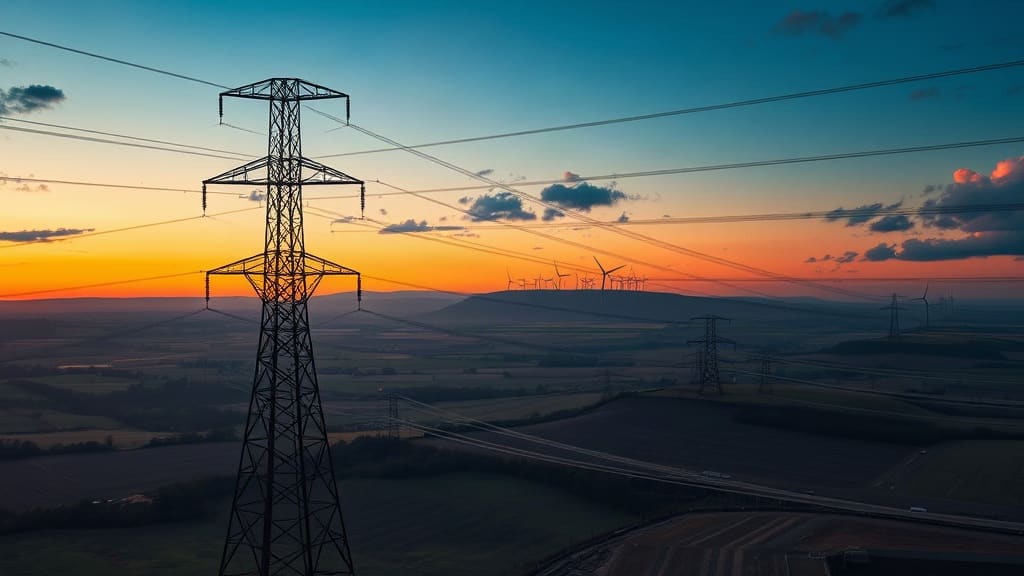
The UK's push towards a cleaner, greener energy system is facing a major roadblock: the electricity grid that carries power from wind farms and solar panels to your home simply isn't being upgraded fast enough. And according to a hard-hitting new report from the National Audit Office, the cost of that inaction will land squarely on consumers' shoulders. If the government doesn't get a move on with the so-called 'great grid upgrade', households could be paying billions more every year just to keep the lights on.
The National Audit Office has laid out the numbers in stark terms. The extra costs associated with managing an ageing and overloaded power network could reach £7.8 billion a year by 2030 if action isn't accelerated. That's not just a line in a dry government report; it's money that would be added to energy bills at a time when many families are already struggling with the cost of living. The warning is clear: speed up the modernisation of the grid, or face the financial consequences.
Why the grid is under so much pressure
To understand why this matters, you have to look at how the UK's energy system has changed over the past two decades. The old electricity grid was built for a world of large, centralised power stations, mostly coal and gas, that pushed electricity out to homes and businesses in a predictable, one-way flow. But the energy transition has turned that model on its head. Today, power comes from thousands of wind turbines, solar farms, and even rooftop panels, often located far from the cities and towns that need the electricity.
That creates a massive logistical challenge. The existing transmission network was never designed to carry large amounts of power from remote coastal areas, where the wind blows hardest, to the industrial heartlands and population centres of England. As a result, the grid is becoming congested. Some days there is too much renewable electricity in one part of the country and not enough capacity to move it to where it's needed. The system operator has to step in, sometimes paying wind farms to shut down and paying gas plants elsewhere to fire up, a process that adds millions to system costs.
The 'great grid upgrade' is already behind schedule
The government has long known about this problem. In fact, there is an ambitious programme of work underway, often referred to as the great grid upgrade. It involves building new high-voltage transmission lines, upgrading substations, and investing in new technologies to manage the flow of electricity more intelligently. The total bill for this modernisation is estimated at around £70 billion, a figure that reflects the scale of the challenge.
But here's the rub: the National Audit Office says that programme is already behind schedule. Delays in planning approvals, supply chain bottlenecks, and a shortage of skilled engineers are all contributing to a slower pace than needed. Every year of delay means more congestion, more constraint payments, and ultimately higher costs for consumers. The NAO's report is not just a warning; it's a wake-up call that the current trajectory is unsustainable.
What the delays mean for your energy bill
You might be wondering how exactly a slow grid upgrade translates into higher bills. The answer lies in the way the electricity system is balanced and paid for. When the grid can't move power from where it's generated to where it's needed, the system operator has to take corrective action. That can involve paying generators to reduce output, paying others to increase output, or even paying industrial users to cut their demand. These costs, known as constraint costs, are recovered through charges that ultimately feed into the bills paid by households and businesses.
The National Audit Office has quantified the potential impact. If the grid upgrade continues at its current pace, those extra costs could reach £7.8 billion a year by 2030. To put that in perspective, it's roughly equivalent to adding more than £100 to the average annual household energy bill, on top of all the other pressures. And that's a conservative estimate; some industry analysts believe the figure could be even higher if delays worsen.
Beyond bills: the economic and climate risks
The consequences of a slow grid upgrade go far beyond household finances. The NAO has also warned that failure to deliver the modernisation programme on time will hold back economic growth. New factories, data centres, and housing developments all need reliable electricity connections, and many are already facing long waits. In some parts of the country, developers are being told they may not get a grid connection until the 2030s, which is stifling investment and job creation.
There's also a climate dimension. The UK has legally binding targets to reduce greenhouse gas emissions and reach net zero by 2050. That requires a massive increase in renewable electricity generation. But if the grid can't carry that power, the whole transition stalls. Wind and solar farms may be built, but their output will be wasted if it can't reach consumers. The result is a double blow: higher bills and slower progress towards a cleaner energy system.
What needs to change
The National Audit Office's report doesn't just identify problems; it also points to solutions. The most urgent need is for the government to provide clearer strategic direction and to remove the barriers that are slowing down grid projects. That includes streamlining planning processes, investing in supply chain capacity, and ensuring that the regulator, Ofgem, has the resources and mandate to approve necessary investments quickly.
There are also practical steps that can be taken to make better use of the existing grid. Smart technologies, such as dynamic line rating and battery storage, can squeeze more capacity out of existing infrastructure without the need for new cables. The government has already committed to some of these measures, but the NAO says implementation is too slow. Every month of delay adds to the eventual cost.
The role of consumers and communities
It's worth noting that grid upgrades are not just a technical issue; they also require public support. New transmission lines often face opposition from local communities concerned about visual impact and property values. The government needs to engage more effectively with these communities, explaining why the upgrades are necessary and offering fair compensation where appropriate. Without public buy-in, even the best-laid plans will face delays.
Consumers also have a role to play, particularly in how they use energy. Time-of-use tariffs, smart meters, and flexible demand can all help to reduce peak loads and ease congestion on the grid. But these tools only work if people understand them and have the incentives to use them. The government and energy suppliers need to do a better job of explaining the benefits and making it easy for households to participate.
The bottom line
The National Audit Office's warning is unambiguous: the UK cannot afford to delay the modernisation of its electricity grid. The costs of inaction are not abstract; they will show up in higher energy bills, slower economic growth, and missed climate targets. The government has the tools to fix this, but it needs to act with urgency. The 'great grid upgrade' is not just an infrastructure project; it's a race against time, and the clock is ticking.
Frequently asked questions
Why are UK electricity grid upgrades so important for my bills?
Grid upgrades are essential because the current network cannot efficiently transport renewable energy from where it's generated to where it's needed. This leads to congestion, where the system operator has to pay generators to turn down or turn off, and those costs are passed on to consumers. Faster upgrades would reduce these constraint payments and help keep bills lower in the long run.
What is the 'great grid upgrade' and how much will it cost?
The 'great grid upgrade' is a programme to modernise the UK's electricity transmission network, including new high-voltage lines, substations, and smart technologies. The total investment is estimated at around £70 billion. The National Audit Office says that if the programme is delayed, the extra costs of managing the grid could reach £7.8 billion a year by 2030, which would be added to consumer bills.
How do grid constraints affect renewable energy targets?
Grid constraints mean that wind and solar farms sometimes have to be switched off because there is no capacity to carry their electricity to consumers. This wastes clean energy and makes it harder for the UK to meet its net zero targets. Upgrading the grid is therefore critical not just for cost control but also for environmental goals.
What can the government do to speed up grid upgrades?
The government can streamline planning approvals, invest in supply chain capacity, and give clearer strategic direction to network operators. It can also support the deployment of smart grid technologies and battery storage to make better use of existing infrastructure. Public engagement and fair compensation for affected communities are also key to avoiding local opposition that can cause delays.
Will my energy bills go up if grid upgrades are delayed?
Yes, according to the National Audit Office, delays will lead to higher constraint costs and other system management expenses, which are ultimately recovered through energy bills. The NAO estimates these costs could reach £7.8 billion a year by 2030, which would add a significant amount to the average household bill unless action is taken now.