
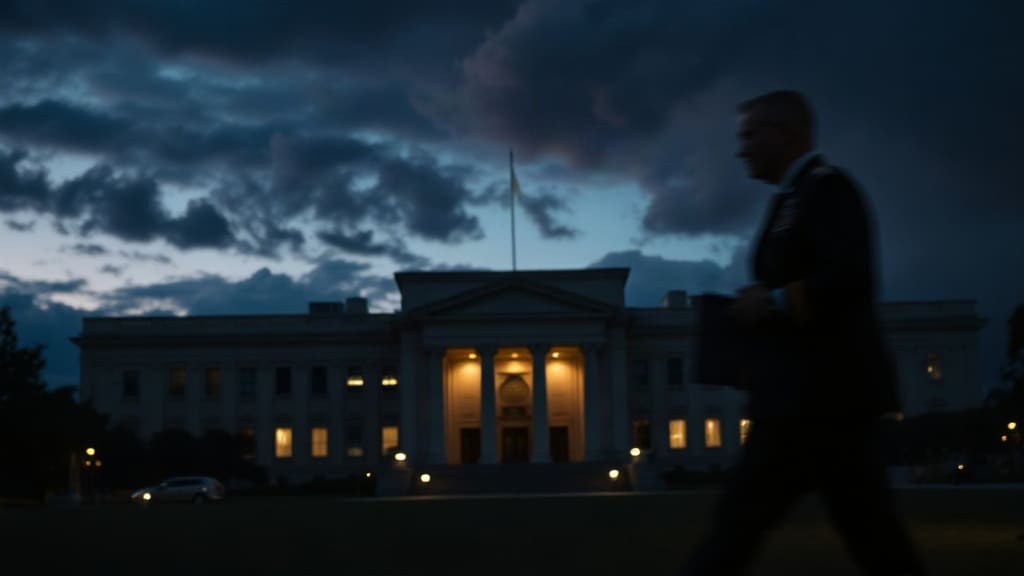
In recent weeks, Pentagon officials have kicked their lobbying efforts into high gear, working behind the scenes to help Congress navigate a path toward President Trump's proposed $1.5 trillion defense budget. The request, which would mark the largest peacetime military spending increase in modern history, has sparked intense debate on Capitol Hill. But as the clock ticks, some Republican senators are growing worried that the Defense Department may have started its charm offensive too late, potentially jeopardizing the entire package.
The budget proposal, if approved, would fund a sweeping modernization of the U.S. military, from advanced fighter jets to cyber capabilities and space-based defenses. It also includes significant pay raises for troops and investments in emerging technologies like artificial intelligence and hypersonic weapons. Yet the sheer size of the request has raised eyebrows even among defense hawks, who question whether such a massive injection of funds can be absorbed efficiently by the Pentagon's sprawling bureaucracy.
The Road to a Record Budget
The journey to this point has been anything but smooth. The Trump administration first floated the idea of a $1.5 trillion budget earlier this year, framing it as a necessary response to growing threats from China and Russia. The Pentagon's leadership, including Secretary of Defense Mark Esper, has argued that years of budget caps and continuing resolutions have left the military underfunded and overstretched. They point to aging equipment, lagging infrastructure, and a readiness crisis that has sidelined entire squadrons and ships.
To build support, Pentagon officials have held dozens of briefings and private meetings with lawmakers, emphasizing the urgency of the request. They've also leveraged relationships with key committee chairs and armed services members. But according to several GOP senators, these efforts only intensified in recent weeks, after the budget request was already formally submitted. That delay, they say, has given skeptics time to organize and has left supporters scrambling to build a coalition.
"The Pentagon is now in full-court press mode, but the window is closing," said one senior Republican aide, who spoke on condition of anonymity. "They should have started this months ago."
Why Some Republicans Are Hesitant
Republican concerns are not about the need for defense spending per se; most in the party agree that the military must be strengthened. Instead, the hesitation stems from a mix of fiscal discipline, procedural hurdles, and political optics. Here are the main sticking points:
- Deficit worries: The budget request comes amid a ballooning federal deficit, which topped $1 trillion in the last fiscal year. Fiscal conservatives argue that such a massive defense increase cannot be justified without corresponding cuts elsewhere.
- Lack of offsets: The administration has not proposed specific offsets to pay for the increase, leading some senators to demand that the Pentagon identify waste and inefficiencies first.
- Timing and process: The late lobbying push has compressed the legislative calendar. With only a few weeks left before the August recess, lawmakers are wary of rushing such a consequential bill.
- Political messaging: Some Republicans worry that a $1.5 trillion price tag could become a liability in the 2020 elections, giving Democrats ammunition to paint the GOP as fiscally irresponsible.
These concerns are not insurmountable, but they require careful navigation. The Pentagon's late start has made that task harder.
Inside the Pentagon's Strategy
To counter the skepticism, the Defense Department has ramped up its outreach. In the past two weeks alone, senior officials have participated in over 30 meetings with lawmakers and staff, according to a Pentagon spokesperson. They've also released detailed fact sheets and held off-the-record briefings to explain how the funds would be spent. The goal is to reassure members that the money will be used wisely and that the request is based on a rigorous strategy, not just a wish list.
One key argument is that the budget would fund a "great power competition" strategy, shifting focus from counterterrorism to near-peer threats. The Pentagon argues that China and Russia are investing heavily in their militaries, and that the U.S. risks losing its technological edge if it doesn't act now. They also emphasize that the budget includes reforms to streamline acquisition and reduce overhead, which could save billions over time.
But even some supporters admit that the Pentagon's messaging has been inconsistent. "They have a good story to tell, but they're not telling it well," said a former defense official who remains in touch with Capitol Hill. "The late push feels reactive, not proactive."
The Broader Implications
The outcome of this budget fight will have far-reaching consequences. If approved, it would reshape the U.S. military for years to come, boosting readiness and accelerating the development of next-generation weapons. It would also send a strong signal to allies and adversaries alike about America's commitment to defense.
On the other hand, a failure to pass the budget could undermine the Pentagon's credibility and embolden U.S. adversaries. It would also force the military to continue operating under stopgap funding measures, which have become all too common in recent years. Those measures waste time and money, as commanders cannot plan long-term or start new projects.
Beyond the immediate budget, the debate raises questions about the role of Congress in overseeing defense spending. Some lawmakers argue that the Pentagon has too much influence in setting budget priorities, while others say that Congress is too quick to add unrequested items. The $1.5 trillion request is testing that balance.
What to Watch Next
As the August recess approaches, all eyes will be on key senators who have yet to commit. The administration is expected to continue its lobbying blitz, with President Trump himself possibly getting involved. Meanwhile, House Democrats are preparing their own alternative, which would likely reduce the top-line number and shift funds toward domestic programs.
For now, the Pentagon is hoping that its late push will be enough to seal the deal. But as one GOP senator put it, "You can't cram a $1.5 trillion budget down people's throats at the last minute and expect no resistance." The coming weeks will determine whether that resistance can be overcome.
Frequently Asked Questions
What exactly is the $1.5 trillion defense budget?
The $1.5 trillion figure represents the total defense budget request for fiscal year 2021, covering both base discretionary spending and overseas contingency operations. It includes funding for personnel, weapons systems, research and development, and infrastructure. It is the largest defense budget request in U.S. history, surpassing even Cold War-era peaks when adjusted for inflation.
Why are some Republican senators opposed to the budget?
Republican senators' concerns are multifaceted. Some are fiscal hawks who worry about the deficit and the lack of offsets. Others are frustrated with the Pentagon's late lobbying effort, which they say has left them little time to review the details. There are also political considerations, as some fear the massive price tag could hurt them in the upcoming elections. However, most Republicans agree on the need for increased defense spending in principle.
How does this budget address great power competition?
The budget prioritizes modernization in areas critical to competing with China and Russia. This includes investments in hypersonic missiles, artificial intelligence, cyber warfare, space-based sensors, and advanced fighter jets like the F-35. It also funds increased presence in the Indo-Pacific and Europe, and boosts research into emerging technologies. The Pentagon argues that these investments are necessary to maintain a technological edge and deter potential adversaries.
What happens if the budget is not passed by the deadline?
If Congress fails to pass the budget by the start of the fiscal year on October 1, the government would likely operate under a continuing resolution (CR). A CR funds agencies at current levels for a set period, but it prohibits new starts and delays long-term planning. The Pentagon has repeatedly warned that CRs are wasteful and harmful to military readiness. A prolonged CR could delay pay raises, training, and maintenance, and force the military to prioritize short-term fixes over long-term strategy.
Can the Pentagon overcome the late start and secure the budget?
It is possible, but challenging. The Pentagon's lobbying efforts have intensified, and they are making a compelling case for the budget's necessity. However, they must overcome procedural hurdles and skeptical lawmakers. Key to their success will be whether they can provide credible assurances that the funds will be spent efficiently and that the request is based on a sound strategy. If they can do that, they may still secure the votes. But time is not on their side.