
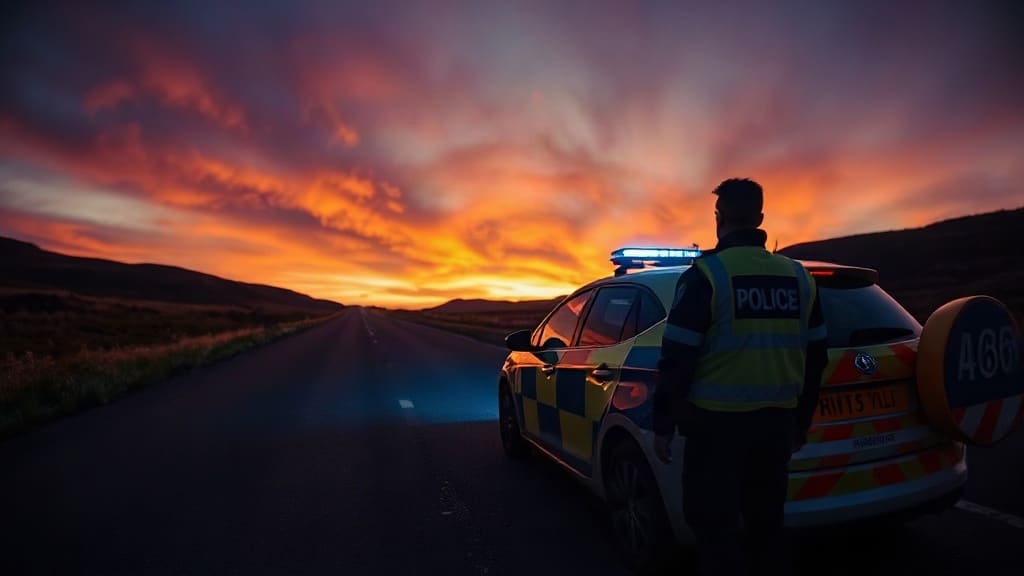
The announcement of a £2 million funding boost for Cleveland Police has landed with a heavy mix of relief and frustration. The money, confirmed by the Home Secretary, is meant to help the force tackle serious crime in the wake of a devastating fatal crash on the A66. But for many who live and work along that stretch of road, the question is simple: why did it take a tragedy to unlock resources that were needed long ago?
The A66 is not just a road; it is a lifeline for communities across Teesside and North Yorkshire, carrying thousands of vehicles every day. Yet it has earned a grim reputation for collisions, near misses, and long stretches where overtaking lanes vanish. The recent fatal crash, which left a community in mourning, has once again put that reputation under a harsh spotlight. The Home Secretary's decision to allocate £2 million to Cleveland Police is a direct response to the public outcry and the operational strain that followed the incident.
What the £2m Funding Actually Means for Cleveland Police
On paper, £2 million sounds significant, but in the context of modern policing it is a targeted injection rather than a transformation. Cleveland Police, one of the smallest forces in the country, has faced years of budget cuts, rising demand, and the challenge of covering a mix of urban deprivation and rural isolation. The new funding is earmarked for tackling serious crime, which encompasses everything from organised drug supply to violent offences and dangerous driving that puts lives at risk.
Insiders suggest the money will likely be used to increase patrols on high-risk routes like the A66, invest in automatic number plate recognition technology, and bolster the force's capacity to investigate serious road traffic collisions. There is also talk of a dedicated roads policing unit being revived, something that was scaled back during austerity. For a force that has often felt stretched to breaking point, the funding is a welcome signal that Whitehall is listening.
The A66: A Road Under Scrutiny
Anyone who has driven the A66 between Darlington and Workington knows the feeling: a sudden change in speed limit, a lorry crawling uphill, a moment of misjudgement that could prove fatal. The road is a patchwork of dual carriageway and single carriageway sections, and it is precisely that inconsistency that makes it dangerous. Local campaigners have long argued for full dualling, but progress has been slow and mired in planning disputes.
The fatal crash that prompted this funding was not an isolated event. In the past five years, there have been multiple serious collisions on the A66, several of them fatal. Each one leaves a trail of grief and anger, and each one reignites the debate about whether enough is being done to make the road safe. The £2 million for Cleveland Police is not a road infrastructure investment; it is a policing response. That distinction matters, because it means the underlying engineering flaws of the A66 remain unaddressed.
Serious Crime and the Wider Policing Picture
It is easy to focus on the A66 itself, but the funding announcement speaks to a broader issue: the fragile state of police funding in England and Wales. Forces like Cleveland have been forced to make impossible choices, prioritising emergency response over proactive crime prevention. The result is that serious crime, including drug dealing, violence, and dangerous driving, has been allowed to fester in some areas.
The Home Secretary's decision to allocate £2 million is a recognition that Cleveland Police cannot simply absorb the cost of a major incident and its aftermath. The investigation into a fatal crash is resource-intensive, involving collision investigators, forensic work, and family liaison officers. Add to that the need to maintain normal policing functions, and the strain becomes overwhelming. This funding is, in effect, a stabilisation measure.
Will £2m Be Enough to Make a Difference?
That is the question on everyone's lips. £2 million is a drop in the ocean compared to the overall police budget, but for a small force it can buy meaningful capability. It could fund a dedicated roads policing team for a year, or pay for advanced driver training for dozens of officers, or upgrade camera technology along the A66. The key will be how the money is spent and whether it leads to lasting change rather than a temporary blip in visibility.
There is also a risk that the funding becomes a political football. The Home Secretary will point to it as evidence of the government's commitment to law and order. Critics will argue that it is a reactive gesture that fails to address the root causes of both road danger and serious crime. The truth, as ever, lies somewhere in between.
What Local Communities Are Saying
In the villages and towns along the A66, the mood is sombre but determined. Residents have seen too many funerals, too many floral tributes tied to roadside barriers. They welcome the extra police funding, but they also want to see tangible action on road safety. Many are calling for average speed cameras, better signage, and a renewed push for full dualling of the A66.
Local businesses, too, have a stake in the outcome. The A66 is a vital freight route, and every closure due to a crash costs the regional economy dearly. A safer road means fewer delays, fewer tragedies, and a more reliable transport network. In that sense, the £2 million for police is an investment in economic resilience as well as public safety.
The Political Context of the Funding Announcement
The timing of the announcement is unlikely to be coincidental. With a general election on the horizon, the government is keen to show that it is tough on crime and responsive to local concerns. Cleveland is a politically contested area, with several marginal constituencies. A £2 million cheque for policing is a relatively cheap way to generate positive headlines and counter the narrative that public services are in decline.
But politics aside, the funding is real and it will have real effects on the ground. The test will be whether those effects are felt by ordinary people: a visible police presence on the A66, quicker response times, and a genuine reduction in serious crime. If the money disappears into bureaucratic black holes, the public's cynicism will only deepen.
Looking Ahead: Policing, Road Safety, and Accountability
The £2 million for Cleveland Police is a starting point, not a solution. It opens a window for the force to demonstrate what it can do with targeted resources, but it also raises expectations that cannot be met overnight. The Home Secretary has made a commitment; now the force must deliver.
For those who lost loved ones on the A66, no amount of money can undo the past. But if this funding leads to a safer road, more effective policing, and a genuine crackdown on serious crime, it will be a fitting legacy. The challenge is to turn a tragedy into a turning point, and that requires more than a cheque. It requires sustained political will, community engagement, and a refusal to accept that fatal crashes are an inevitable cost of modern life.
Frequently Asked Questions
Why did Cleveland Police receive £2 million after the A66 crash?
The funding was allocated by the Home Secretary to help Cleveland Police tackle serious crime in the aftermath of a fatal crash on the A66. The incident highlighted the force's resource constraints and the need for additional support to manage the investigation and enhance road safety enforcement.
How will the £2 million be used by Cleveland Police?
While exact allocations have not been fully detailed, the funding is expected to support increased patrols on high-risk routes, investment in technology such as ANPR cameras, and possibly the re-establishment of a dedicated roads policing unit. The goal is to reduce serious crime and improve road safety.
Is the A66 considered a dangerous road?
Yes, the A66 has a history of serious and fatal collisions, partly due to its mix of single and dual carriageway sections and high traffic volumes. Local campaigners have long called for safety improvements, including full dualling, but progress has been slow.
Will the £2 million fix the safety problems on the A66?
The funding is for policing, not road infrastructure. It may lead to more enforcement and a visible police presence, but it will not address the underlying engineering issues of the A66. Separate investment in road upgrades would be needed for that.
What does this funding mean for the wider Cleveland area?
Beyond the immediate road safety focus, the funding is a boost for the force's overall capacity to tackle serious crime. It may lead to more proactive policing in communities along the A66 corridor and improve public confidence in the police.