
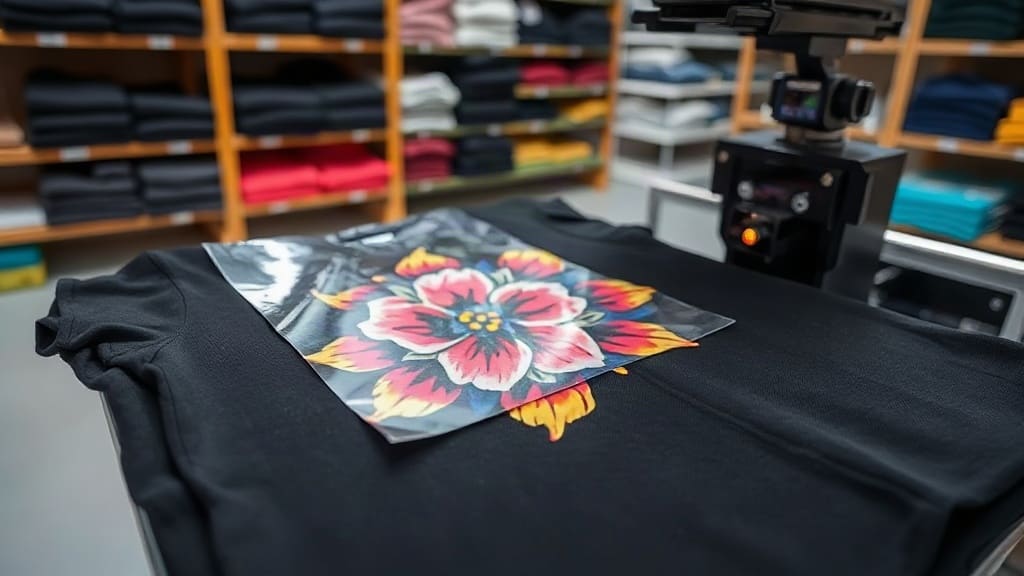
If you’ve been around custom apparel for even a minute, you’ve probably heard someone mention DTF. Not the slang you might be thinking of, but Direct to Film, a printing method that’s quietly changing how small shops, side hustlers, and even big brands decorate t-shirts, hoodies, and totes. Maybe you’ve seen a design with crisp edges and colors that pop like a screen print but feel soft like vinyl. Chances are, that was a DTF transfer. In this guide, I’ll walk you through exactly what DTF is, why it’s winning fans, how to find DTF transfers near me, and whether it’s the right move for your next project. No fluff, just the stuff I wish someone had told me when I first started printing.
What Exactly Is a DTF Transfer?
Let’s get the basics straight. A DTF transfer is a printed design on a special film that you then heat press onto fabric. The process starts with a digital design. That design gets printed onto a PET film using a dedicated DTF printer with water-based inks. While the ink is still wet, a hot melt adhesive powder is applied and then cured. The result is a sheet of film with your design ready to be pressed onto a shirt, hat, bag, or even denim.
Unlike DTG (direct to garment), which prints directly onto the shirt, DTF prints onto the film first. That film becomes a transfer you can store, sell, or press later. It’s a bit like a hybrid between screen print transfers and vinyl, but with a flexibility that neither offers.
Here’s a quick breakdown of the DTF transfer process:
- Design is created digitally (Photoshop, Illustrator, or even Canva).
- Design is printed in reverse onto a clear PET film with special DTF inks.
- Hot melt powder is applied evenly over the wet ink.
- The film is heated to cure the powder, which bonds to the ink.
- The transfer is allowed to cool and is then ready for pressing.
- At press time, you place the film on the garment, apply heat and pressure for 10–15 seconds, peel warm or cold depending on the film type, and you’re done.
That’s it. No weeding, no pretreating, no cutting. Just print, powder, cure, press.
Why DTF Transfers Are Suddenly Everywhere
It’s not a fad. The rise of DTF transfers has real reasons behind it. Let me break down the main advantages I’ve seen firsthand and heard from other printers.
1. Works on Almost Any Fabric
Cotton, polyester, blends, nylon, canvas, denim, even some leather-like materials. DTF doesn’t care much about the substrate. DTG can struggle with high polyester counts and dark colors. Screen printing can be a pain on performance fabrics. DTF just works. That opens up a ton of possibilities for products beyond basic tees.
2. No Pretreatment Needed
With DTG, you often have to pretreat dark garments to make the white ink sit properly. DTF skips that step entirely. You press the transfer directly onto the fabric. That saves time, money, and mess, especially for home-based printers.
3. Vibrant Colors and Fine Detail
Because the design is printed on film, you can achieve very fine lines, small text, and gradients that would be a nightmare to weed in vinyl or require high mesh counts in screen printing. The white underbase is printed as part of the transfer, so colors stay bright even on black shirts.
4. Durability That Holds Up
When pressed correctly, a DTF transfer can last for dozens of washes without cracking or fading. The adhesive bonds well with the fabric, and the ink layer is flexible. I’ve personally washed DTF shirts 30+ times with minimal wear. Compare that to some vinyl that starts peeling after ten washes.
5. Cost-Effective for Small Runs
Screen printing shines for 50+ shirts, but setup costs and minimums can kill small orders. DTF has no screen setup. You can print one transfer or a hundred for almost the same per-unit cost. That makes it perfect for custom one-offs, samples, and low-volume drops.
6. Easy to Store and Ship
Once cured, DTF transfers are stable for months if kept out of direct sunlight and humidity. You can print a stack of transfers for designs you sell regularly and press them on demand. Many online sellers sell ready-made DTF transfers, and buyers press them at home. It’s a whole new market.
DTF vs. Other Printing Methods: A Quick Comparison
I get asked all the time: “Should I use DTF or vinyl?” or “Why not just use DTG?” Here’s a straightforward comparison to help you decide.
DTF vs. DTG (Direct to Garment)
- Fabric compatibility: DTF works on almost anything; DTG prefers cotton and high cotton blends.
- Pretreatment: DTF none; DTG requires pretreatment for dark garments.
- Feel: DTF has a slight hand (though thin films reduce it); DTG feels almost like part of the shirt.
- Small details: Both can do fine detail, but DTF often holds better edges on textured fabrics.
- Setup cost: DTF printer and powder system can be cheaper than a DTG printer, especially for entry-level.
DTF vs. Vinyl (HTV)
- Weeding: DTF no weeding; vinyl requires careful weeding, especially for intricate designs.
- Color count: DTF unlimited colors in one pass; vinyl requires layering or multiple colors cut separately.
- Stretch: DTF stretches with fabric; vinyl can crack or peel on high-stretch areas.
- Feel: Vinyl is often thicker and more plastic-like; DTF is thinner and softer.
DTF vs. Screen Print Transfers
- Minimums: Screen print transfers often have higher minimums; DTF can be one-off.
- Detail: DTF handles gradients and photorealistic images better.
- Durability: Both are durable when done right, but DTF has an edge on stretch and washability.
How to Find Reliable DTF Transfers Near Me
If you’re not ready to invest in a DTF printer, you can buy ready-made transfers from suppliers. Searching for DTF transfers near me can connect you with local print shops that offer DTF printing services. But not all DTF transfers are equal. Here’s what to look for.
Questions to Ask a DTF Transfer Supplier
- What film and powder do they use? Quality varies. Ask about the brand of film and adhesive. Reputable suppliers will tell you.
- What is the resolution of their prints? Look for at least 1440 DPI for crisp results. Lower resolutions can look grainy.
- Do they offer samples? A good supplier will send a sample transfer so you can test on your own garments.
- What are their curing methods? Properly cured powder is essential for durability. Ask about their process.
- What is their turnaround time? Local suppliers might offer same-day or next-day pickup, which can be a lifesaver for rush jobs.
- Can they do gang sheets? If you have multiple small designs, gang sheets let you print them all on one large transfer, saving money.
Local vs. Online DTF Transfer Suppliers
Local suppliers offer the advantage of quick pickup and the ability to see samples in person. You can also build a relationship and troubleshoot issues face to face. Online suppliers often have lower prices due to volume, but shipping time and cost can offset savings for small orders. I’ve used both. For rush orders and testing, local is great. For stocking up on popular designs, online bulk pricing wins.
Red Flags to Avoid
- Prices that seem too good to be true. Quality film and powder cost money. Super cheap transfers often use low-grade materials that fail after a few washes.
- No clear contact information. If you can’t reach a human, walk away.
- Vague answers about materials. If they won’t tell you what they use, they’re probably hiding something.
- No reviews or testimonials. Every business starts somewhere, but zero social proof is a risk.
How to Press DTF Transfers Like a Pro
Even the best DTF transfer will fail if you press it wrong. Here’s my step-by-step method that has given me consistent results on cotton, polyester, and blends.
What You’ll Need
- Heat press (a Cricut EasyPress can work for small designs, but a clamshell or swing-away press is better for even pressure)
- Parchment paper or Teflon sheet
- Lint roller
- Your garment, pre-washed without fabric softener
- The DTF transfer
Pressing Instructions
- Preheat the garment for 5 seconds to remove moisture and wrinkles.
- Lint roll the surface to remove any fibers.
- Place the transfer face down on the garment in the exact position.
- Cover with parchment paper or a Teflon sheet.
- Press at 320°F (160°C) for 12–15 seconds with firm pressure (about 40–60 PSI).
- Remove the garment from the press and let it cool slightly. Most DTF films are cold peel, but some are warm peel. Follow the supplier’s instructions.
- Peel the film slowly at a 45-degree angle.
- If any areas lift, repress for 5 seconds.
Pro tip: Do not use a home iron. It won’t provide even heat or pressure, and you’ll end up with a patchy result. Invest in a basic heat press if you plan to do more than a few shirts.
Common DTF Transfer Problems and How to Fix Them
Like any printing method, DTF has its quirks. Here are the most common issues I’ve run into and how to solve them.
1. Design Cracks After Washing
This usually means under-curing or using too little powder. Make sure the powder is fully melted during curing and that you’re using the right amount. Also, check your press temperature and time. Too little heat can leave the adhesive weak.
2. Transfer Peels Off Entirely
This is often a pressure issue. If the press doesn’t apply even pressure across the design, the adhesive won’t bond everywhere. Try increasing pressure or using a pressing pillow for seams and zippers.
3. Colors Look Dull After Pressing
If the ink looks faded, it might be a film issue or you might be pressing too hot. Excessive heat can cause ink to sublimate or lose vibrancy. Stick to the recommended temperature and time.
4. White Residue Around the Design
That’s excess powder that wasn’t cured properly or applied too thickly. You can brush off excess powder before curing, but if it’s already cured, you might need to adjust your powder application method.
5. Transfer Sticks to the Parchment Paper
This happens when the ink isn’t fully dry before pressing or when you use a cheap parchment paper. Use a high-quality Teflon sheet instead.
Is DTF Right for Your Business or Hobby?
If you’re just making a few shirts for yourself, buying ready-made DTF transfers is the way to go. You get professional results without the upfront cost of a printer. If you plan to sell custom shirts regularly, investing in a DTF printer can pay for itself quickly. Here’s a rough breakdown of costs:
- Ready-made transfers: $3–$10 per transfer depending on size and supplier.
- Entry-level DTF printer: $2,000–$5,000 for a converted inkjet printer with DTF inks and a powder shaker.
- Commercial DTF printer: $10,000+ for a purpose-built machine with automatic powder application and curing.
If you’re printing fewer than 20 shirts a week, buying transfers is more cost-effective. If you’re doing 50+ shirts a week, owning a printer makes sense.
Final Thoughts on DTF Transfers
DTF is not just another printing trend. It solves real problems that DTG, vinyl, and screen printing can’t easily address. It’s versatile, durable, and surprisingly easy to learn. Whether you’re a hobbyist looking to make unique gifts or a business owner wanting to expand your product line, DTF transfers deserve a serious look.
And if you’re not ready to buy a printer, start by finding DTF transfers near me from a local supplier. Test a few designs, press them, wash them, and see how they hold up. I bet you’ll be impressed. Then, when you’re ready to scale, the path to owning your own DTF setup is clearer than you think.
Frequently Asked Questions About DTF Transfers
What is the difference between DTF and sublimation?
Sublimation only works on polyester or poly-coated surfaces and the ink becomes part of the fabric, so it’s great for white or light garments. DTF works on almost any fabric and color because it sits on top with a white underbase. DTF is more versatile for cotton and dark shirts.
Can I use a regular inkjet printer for DTF transfers?
No, a regular inkjet printer cannot be used as-is. You need a printer that has been converted to accept DTF inks, which are different from standard inks. Many people convert Epson printers like the P400 or XP-15000, but you must dedicate the printer to DTF only and install a bulk ink system.
How long do DTF transfers last on a shirt?
When pressed correctly and cared for properly, DTF transfers can last 50+ washes without significant fading or cracking. Wash inside out in cold water and avoid high heat drying to extend the life.
Can I press DTF transfers onto nylon or polyester?
Yes, DTF works well on nylon and polyester, but you should lower the temperature slightly to avoid scorching synthetic fabrics. Always test on a scrap piece first. Some suppliers offer low-temperature DTF films specifically for heat-sensitive materials.
Do I need to mirror my design for DTF transfers?
Yes, the design must be mirrored before printing so that when you place the film face down on the garment, the image appears correctly after pressing. Most DTF RIP software has a mirror option built in.