
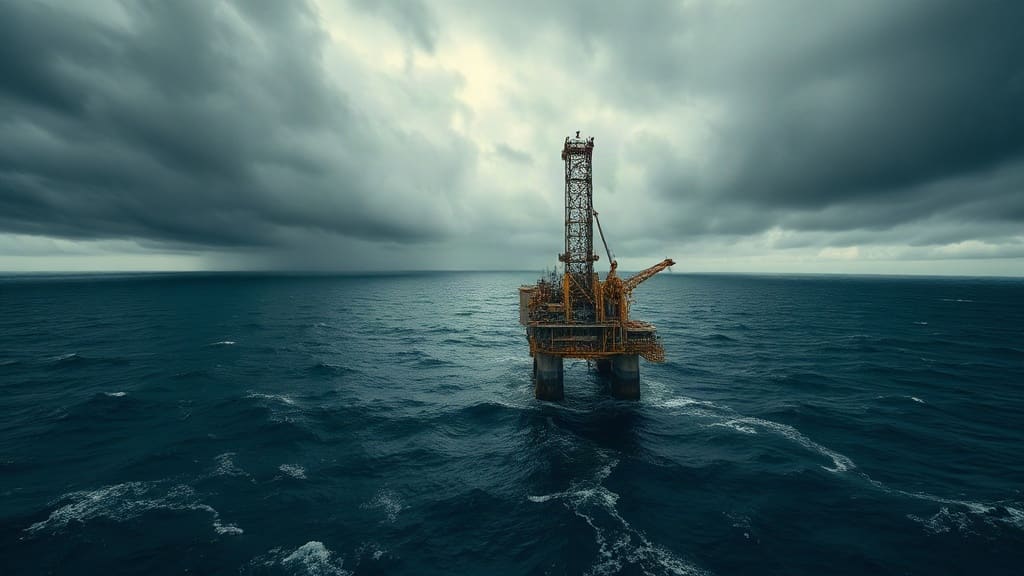
Argentina has taken a dramatic step in its long-running sovereignty dispute over the Falkland Islands, announcing plans to file a criminal case against an oil company operating in the contested waters. The move, confirmed by government sources this week, signals a sharp escalation from diplomatic rhetoric to legal action that could rattle international energy investors.
The decision comes just days after President Javier Milei intensified his government's claims over the archipelago, known in Argentina as the Islas Malvinas. While Buenos Aires has long challenged British administration of the islands, pursuing criminal charges against a private company marks a new frontier in the decades-old conflict.
Why Argentina Is Taking Legal Action Now
For years, Argentina has protested oil exploration around the Falklands, arguing that the United Kingdom has no right to authorize drilling in what it considers its own territorial waters. However, the latest announcement suggests a more aggressive strategy under Milei's administration, which has blended libertarian economics with nationalist rhetoric on the Malvinas issue.
The criminal case reportedly targets a company holding exploration licenses granted by the Falkland Islands government, which operates under British sovereignty. Argentine officials claim the firm is illegally extracting resources from Argentina's continental shelf, a charge that could carry severe penalties under Argentine law.
Legal experts note that Argentina has previously threatened legal action against oil companies but rarely followed through with criminal filings. This time, the government appears determined to test the boundaries of international law and send a clear message to the energy sector.
The Falklands Oil Industry: A Lucrative but Contested Frontier
Offshore oil exploration near the Falklands has been a source of tension since the 1990s, when seismic surveys first suggested significant hydrocarbon reserves. The British Geological Survey estimates the North Falkland Basin could hold up to 325 million barrels of recoverable oil, though commercial production has remained elusive.
Despite the political risks, several companies have pursued exploration, drawn by the potential for substantial returns. The current operator, whose name has not been officially released in Argentine statements, holds licenses in the North Falkland Basin and has conducted drilling campaigns in recent years.
Argentina's legal offensive against Falklands oil drillers could have immediate consequences for the company's operations. Even if the case never reaches a courtroom, the threat of criminal liability may deter investors, insurers, and contractors from supporting future projects.
Historical Context: Sovereignty, War, and Resource Rights
The Falkland Islands have been under British control since 1833, but Argentina has never relinquished its claim. The dispute erupted into war in 1982, when Argentina's military junta invaded the islands, only to be expelled by a British task force. The conflict left deep scars on both nations and solidified the islands' status as a self-governing British Overseas Territory.
In 2013, a referendum in the Falklands showed 99.8% of islanders voting to remain British, a result Argentina dismissed as irrelevant to its territorial claim. The oil question has only sharpened the divide, with islanders viewing hydrocarbon development as essential to their economic future.
Sovereignty tensions over Falklands oil exploration have persisted through multiple Argentine governments, but Milei's approach marks a departure. While previous presidents sought multilateral pressure through the United Nations, Milei has shown willingness to act unilaterally, even as he courts foreign investment in Argentina's own energy sector.
Legal and Diplomatic Implications
Filing a criminal case against a foreign oil company operating in disputed waters raises complex questions of jurisdiction. Argentina cannot arrest executives or seize assets outside its territory without international cooperation, which the United Kingdom is unlikely to provide.
However, the case could complicate the company's access to global financial markets, as banks and investors assess the risk of legal entanglements. It may also strain already tense relations between London and Buenos Aires, though both governments have recently signaled a willingness to maintain pragmatic dialogue on other issues.
International law offers no clear resolution. The United Nations Convention on the Law of the Sea allows coastal states to claim an exclusive economic zone, but the Falklands' status remains contested. Argentina argues that the islands are part of its continental shelf, while the UK maintains that the islanders have the right to develop their own resources.
Reactions from London, Stanley, and the Energy Sector
The British government has dismissed Argentina's move as legally baseless, reiterating its commitment to the Falkland Islanders' right to self-determination. A Foreign Office spokesperson stated that the UK has "no doubt" about its sovereignty over the islands and surrounding maritime areas.
In Stanley, the Falklands' capital, officials expressed concern that the criminal case could scare off investment at a critical time. The local government has been actively promoting a new licensing round, hoping to attract companies despite the challenging economics of offshore drilling in the South Atlantic.
Energy analysts warn that criminal charges against Falklands oil operators add another layer of risk to an already high-cost frontier. Even without a successful prosecution, the uncertainty could make it harder for the company to raise capital or secure drilling rigs.
What Happens Next?
Argentina's legal team is expected to file the case in a federal court in Tierra del Fuego, the province that administers Argentina's claim to the islands. The company will likely ignore the proceedings, arguing that Argentine courts have no jurisdiction over activities licensed by the Falkland Islands government.
The case may drag on for years without resolution, but its political impact could be immediate. Milei faces domestic pressure to demonstrate toughness on the Malvinas, even as his economic reforms demand foreign investment. Balancing those priorities will test his government's diplomatic skill.
For the oil company at the center of the storm, the path forward is uncertain. It may seek reassurance from the UK government, but London's support has limits in a dispute where legal and political interests collide. The broader industry will watch closely, knowing that a precedent here could affect other contested territories around the world.
Frequently Asked Questions
What is Argentina's legal basis for the criminal case against the oil company?
Argentina claims that the Falkland Islands and their surrounding waters are part of its sovereign territory, and therefore any oil exploration there without Argentine permission violates its laws. The government argues that the company is illegally extracting resources from Argentina's continental shelf, which could constitute a criminal offense under Argentine legislation.
Could the criminal case actually stop oil drilling in the Falklands?
In practice, it is unlikely to halt operations immediately. The company operates under licenses from the Falkland Islands government and has no assets or personnel in Argentina. However, the case could increase legal uncertainty, raise insurance costs, and deter future investment, potentially slowing the development of the oil industry in the region.
How has the United Kingdom responded to Argentina's announcement?
The UK government has rejected Argentina's claims, reaffirming its sovereignty over the Falkland Islands and the right of the islanders to develop their own resources. British officials have called the criminal case legally unfounded and have stated that they will continue to support the Falkland Islands' economic development.
What impact could this have on Argentina's own energy ambitions?
Argentina is actively seeking foreign investment in its energy sector, particularly in the Vaca Muerta shale formation. Some analysts worry that aggressive legal actions against international oil companies could send a chilling signal to investors, potentially undermining Argentina's own economic goals.
Has Argentina ever filed a similar case before?
Argentina has previously threatened legal action against companies operating in the Falklands, but criminal filings are rare. In the past, the government has used diplomatic channels and economic pressure, such as restricting port access for vessels involved in Falklands oil exploration, rather than pursuing criminal charges in its own courts.