
Andrew Haigh has long been a master of intimate, emotionally resonant storytelling. From Weekend to 45 Years and the haunting All of Us Strangers, he has consistently explored the complexities of love, loss, and identity with a delicate touch. His latest film, A Long Winter, continues this tradition, offering a deeply moving portrait of grief and connection. With a career-best performance from Fred Hechinger (The White Lotus, Nickel Boys) and a supporting cast that includes Kit Connor, Ebon Moss-Bachrach, and Caitríona Balfe, the film is already generating buzz as one of the year's most powerful queer dramas. In this review, we delve into what makes A Long Winter an unmissable cinematic experience.
A Haunting Story of Love and Loss
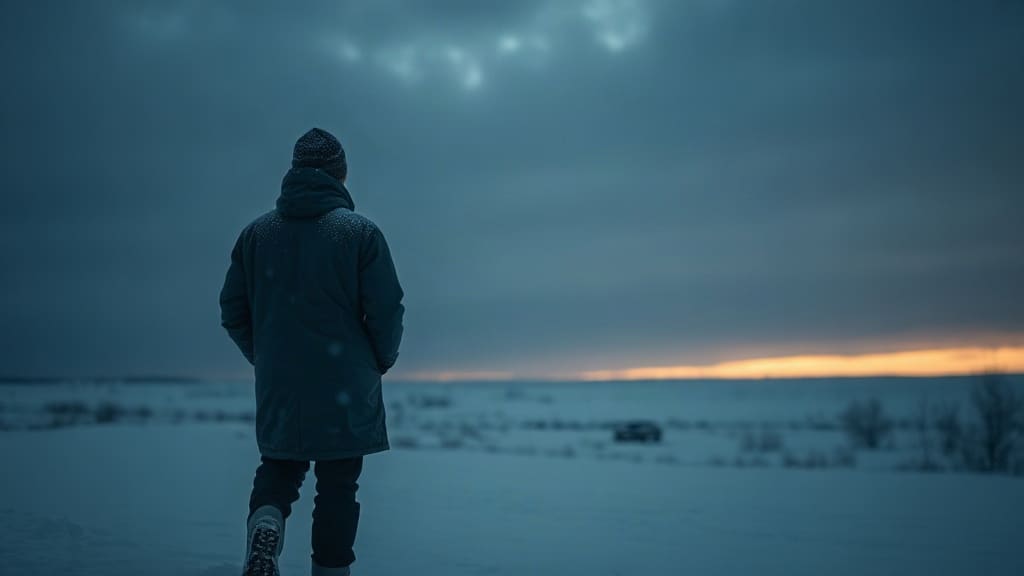
Set in a snowbound rural England, A Long Winter follows a young man (Hechinger) grappling with the sudden death of his partner. As he navigates the frozen landscape and the even frostier silence of those around him, he is forced to confront memories he has long suppressed. Haigh's script, based on an original story, weaves together past and present, blurring the lines between memory and reality. The film is not just about grief; it's about the courage to love in a world that often refuses to understand. The narrative unfolds slowly, allowing the audience to sit with the characters' pain and small moments of joy. It's a story that lingers long after the credits roll.
Fred Hechinger's Career-Defining Performance
At the heart of A Long Winter is Fred Hechinger's astonishing turn as the grieving protagonist. Hechinger, known for his supporting roles in films like Thelma and Eighth Grade, steps into the spotlight with a performance of remarkable depth and subtlety. He conveys a universe of emotion with the smallest gestures: a trembling hand, a distant gaze, a half-smile that never reaches his eyes. It's a role that demands vulnerability, and Hechinger delivers it without a hint of vanity. He is ably supported by Kit Connor (Heartstopper) as a local farmer who becomes an unexpected source of comfort. Connor brings a warm, grounded presence that contrasts beautifully with Hechinger's raw intensity. Ebon Moss-Bachrach (The Bear) and Caitríona Balfe (Outlander) round out the cast, each delivering nuanced performances that add layers to the story.
Andrew Haigh's Direction: A Masterclass in Restraint
Haigh's direction is as assured as ever. He allows scenes to breathe, letting silence speak volumes. The cinematography, by regular collaborator Jamie Ramsay, captures the bleak yet beautiful winter landscape, using it as a metaphor for the protagonist's emotional isolation. The film's sound design is equally impressive, with the crunch of snow and the howl of wind becoming characters in their own right. Haigh's screenplay, co-written with a frequent collaborator, is sharp and poetic, avoiding melodrama in favor of truthful, understated moments. He has a knack for finding the extraordinary in the ordinary, and A Long Winter is no exception.
Why A Long Winter Is Unmissable
In a cinematic landscape often dominated by spectacle, A Long Winter stands out for its quiet power. It's a film that trusts its audience to feel, to think, and to connect. The queer romance at its center is treated with the same dignity and complexity as any great love story, and that in itself is worth celebrating. But beyond its cultural significance, A Long Winter is simply great filmmaking. It's a reminder that cinema can be both deeply personal and universally resonant. Whether you're a fan of Haigh's previous work or new to his films, this is one you won't want to miss.
Themes of Isolation and Connection
The film's winter setting is more than just a backdrop; it's a character in itself. The endless snow and gray skies mirror the protagonist's internal state, but they also highlight moments of warmth and connection. A touch, a shared glance, a conversation by the fire—these become monumental acts of love. Haigh explores how grief can isolate us, but also how human connection can thaw even the coldest of hearts. It's a delicate balance, and the film navigates it with grace.
Final Thoughts: A Triumph of Queer Cinema
A Long Winter is a triumph. It's a film that will resonate with anyone who has loved and lost, and it's a powerful addition to the canon of queer cinema. Fred Hechinger's performance is a revelation, and Andrew Haigh proves once again why he is one of our most vital filmmakers. This is a must-see for fans of character-driven dramas and anyone who appreciates storytelling at its finest. The film's emotional depth is matched by its technical brilliance, making it a truly unmissable experience. Don't let this one pass you by; it's a journey worth taking.
Frequently Asked Questions
What is A Long Winter about?
A Long Winter is a queer drama about a young man coping with the death of his partner. Set in rural England, it explores themes of grief, memory, and the healing power of connection.
Who stars in A Long Winter?
The film stars Fred Hechinger, Kit Connor, Ebon Moss-Bachrach, and Caitríona Balfe. It is written and directed by Andrew Haigh.
Is A Long Winter based on a true story?
No, it is an original screenplay by Andrew Haigh, though it draws on universal experiences of love and loss.
Where can I watch A Long Winter?
The film is currently in select theaters and will be available on streaming platforms soon. Check your local listings for details.
Why is A Long Winter considered a must-see?
It features a career-best performance from Fred Hechinger, masterful direction by Andrew Haigh, and a poignant story that resonates deeply. It's a standout in queer cinema and filmmaking in general.